Unbothered and Unapologetic: How Desi Women in America Are Rewriting the Rules of Joy

Photo by Photo by Rejaul Karim on Unsplash on Unsplash
There's a moment a lot of South Asian women in America know intimately. You're getting ready to go out — maybe a rooftop party, maybe just brunch — and you love what you're wearing. Then your mom calls. Or your nani texts. Or you walk past a family friend at the grocery store on the way out. And suddenly, the outfit you felt incredible in becomes a negotiation.
That negotiation? A whole generation of Desi women is opting out of it.
Call it a cultural shift, call it a vibe, call it whatever you want — but something real is happening among South Asian women in their twenties and thirties across the US. They're not waiting for a green light from their family group chats or mainstream beauty standards to feel good about themselves. They're showing up fully, loudly, and on their own terms. And honestly? It looks amazing.
The Weight of "What Will People Say"
To understand why this shift feels so significant, you have to understand what it's pushing against. For a lot of Desi women raised in American households, the pressure to present a certain way wasn't just about modesty — it was about reputation management. Yours, your family's, your entire extended network's. The aunties weren't just commenting on your hemline; they were policing a whole system of social currency.
That pressure came from two directions at once. On one side, conservative family and community expectations rooted in South Asian cultural norms that equated a woman's restraint with her worth. On the other, a mainstream American beauty landscape that, for decades, barely registered Brown women as desirable at all — or flattened them into a single, palatable archetype.
Neither space left a lot of room for a Desi woman to just... be herself. Joyfully, messily, confidently herself.
"I spent so much of my teens and early twenties trying to be acceptable to everyone," says Priya, a 28-year-old marketing professional based in Chicago. "Acceptable to my family, acceptable to my white friends, acceptable to whatever beauty standard was trending. It was exhausting. At some point I was like — for who? For what?"
Enter the Feed
Social media didn't create this movement, but it absolutely amplified it. Instagram, TikTok, and YouTube have given Desi women in America a place to see themselves reflected back in ways that feel true — not filtered through a Bollywood lens, not sanitized for mainstream palatability.
Creators like Surbhi Sarna, Nabela Noor, and a growing constellation of smaller accounts have built communities around the radical idea that South Asian women get to be multidimensional. They can wear a saree and a two-piece. They can talk about izzat and set boundaries with their in-laws. They can love their culture deeply and still refuse to be shrunk by it.
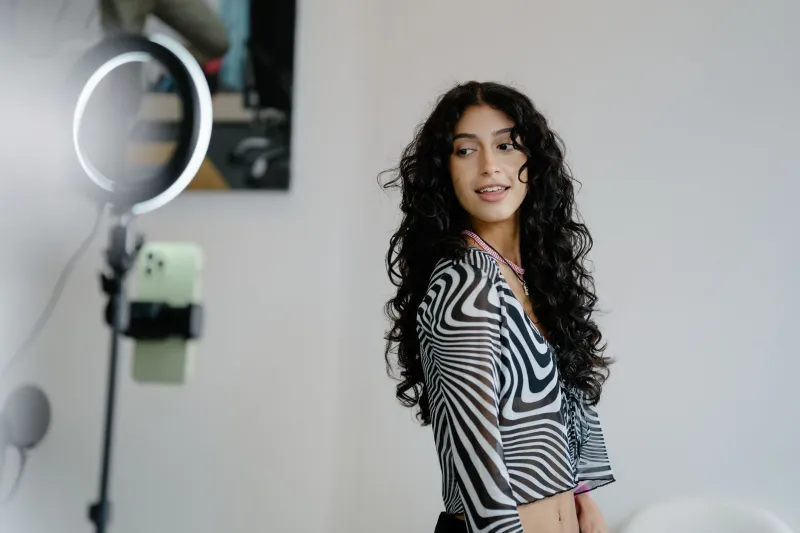
The content that resonates most isn't the polished, aspirational stuff. It's the candid videos — the ones where someone talks about finally wearing a crop top at a family wedding and surviving, or posts a thirst trap with a caption that's half Urdu, half Gen Z slang. It's the specific texture of Desi womanhood that finally has a platform.
"When I see a Brown girl on my FYP just being unabashedly herself — not performing modesty, not performing westernization either — I feel something shift in my chest," says Ananya, a 24-year-old grad student in Atlanta. "It's like, oh, that's allowed. We're allowed."
Fashion as Fluency
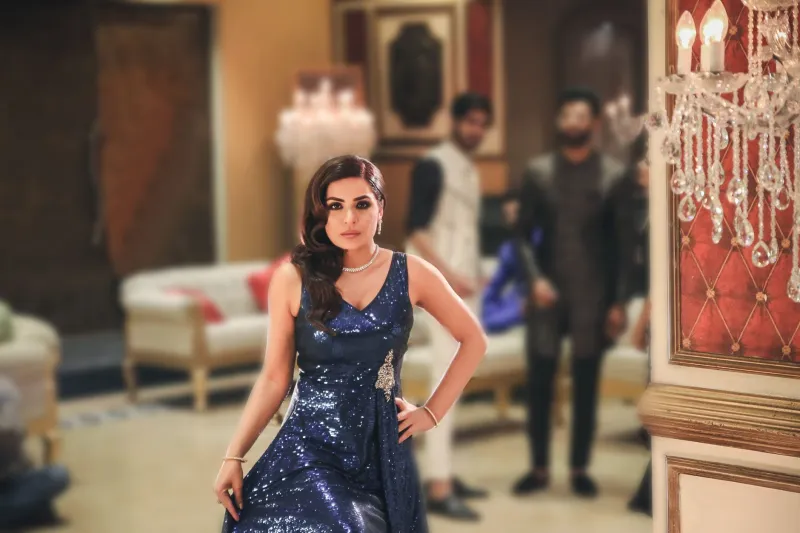
Style has become one of the loudest languages in this conversation. Desi women are mixing silhouettes in ways that feel genuinely new — pairing sharara pants with corset tops, draping dupattas over streetwear, wearing bindis to music festivals without the apology that used to come attached. It's not fusion for the sake of novelty; it's a visual vocabulary that reflects lives that are actually lived between cultures.
Designers like Priya Ahluwalia and a new wave of South Asian American fashion creators are feeding this energy with intention. But honestly, some of the most exciting styling is happening on no budget at all — thrift finds, hand-me-down kurtas, and $12 jewelry from the Indian grocery store district, all put together with an eye that knows exactly what it's doing.
The message isn't "look how modern I am" or "look how traditional I am." It's something simpler and more powerful: look how me I am.
The Pushback Is Real
None of this is happening without friction. Family tension is real and often painful. For women in more conservative households, choosing visibility — on social media or in person — can come with genuine consequences. Strained relationships, family conflict, the particular loneliness of being misunderstood by the people you love most.
And the mainstream still has its blind spots. The beauty industry is getting better, but "better" is relative when you're still fighting for foundation shades that actually work, for campaigns that don't treat Brown skin as exotic, for a cultural moment that celebrates South Asian women without immediately trying to monetize or tokenize them.
There's also an honest conversation to be had about class and access within the Desi American community itself. The freedom to be unapologetically visible is easier to claim when you have financial independence, geographic distance from family, or a certain kind of social capital. Not every Desi woman in America has all three.
Joy as Resistance
What makes this moment feel different from previous generations' quiet rebellions is the emphasis on joy. Not just survival, not just endurance, not just the grim work of dismantling expectations — but actual, uncontained happiness. The kind that shows up in a reel of someone dancing in their living room in a lehenga at 2am. The kind in a caption that says "yes, my mom is horrified, yes, I look incredible."
There's something politically significant about that, even when it doesn't look political. Joy, for a group of women who've been told in a hundred subtle ways to make themselves smaller, is an act of refusal. Choosing to feel good — in your body, in your clothes, in your choices — when the culture around you has historically profited from your self-doubt? That's not trivial.
It's actually kind of revolutionary.
"I don't think I'm doing anything radical," says Meera, a 31-year-old nurse in Houston who recently started a TikTok account documenting her personal style. "I'm just living my life. But I guess that's the point, right? That we get to just live our lives."
Yeah. That's exactly the point.
And a whole generation of Desi women in America is living it — loudly, beautifully, and entirely on their own terms.