Corner Office Energy: The South Asian Women Quietly Running Corporate America
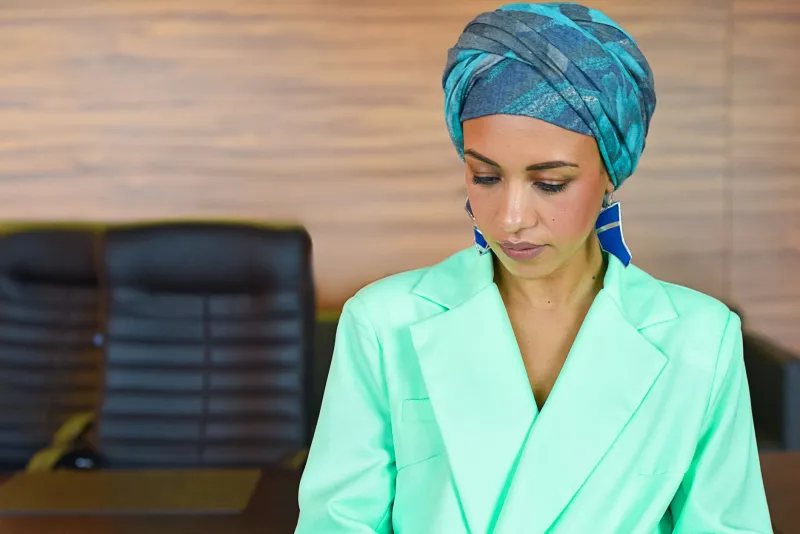
Let's be real for a second. The image of a South Asian woman in corporate America has historically been one of two things: the overachieving analyst who never speaks up in meetings, or the token diversity hire trotted out for the company newsletter. Neither one is accurate. Neither one is fair. And a growing generation of desi women in executive suites across the country is making sure that narrative gets buried for good.
From Silicon Valley to Wall Street, from Chicago's Loop to the boardrooms of Houston energy giants, South Asian women are ascending — not just as individuals, but as a collective force reshaping what leadership looks and sounds like in America's biggest companies.
The Numbers Don't Lie (But They Don't Tell the Whole Story Either)
The data is striking on its own. Studies from McKinsey and LeanIn.org have consistently shown that South Asian women are among the most educated demographic groups in the United States, outpacing almost every other group in graduate degree attainment. Yet that education hasn't historically translated into proportional representation at the senior leadership level. The gap between "highly qualified" and "in the room where it happens" has been real, wide, and frustrating.
But something has shifted over the past decade. Names like Indra Nooyi, Jayshree Ullal, and Padmasree Warrior didn't just crack open doors — they propped them wide enough for a new wave of South Asian women to walk through with considerably less resistance. The visibility matters. Representation in the C-suite creates a permission structure that younger desi women in mid-level roles can actually feel.
Still, the pipeline problem persists. And the women navigating it know that raw ambition alone doesn't cut it in environments that weren't built with them in mind.
Playing the Long Game in Spaces That Weren't Built for You
Talk to any South Asian woman who's made it to a VP title or above at a major American company, and you'll hear a version of the same story: at some point, she had to figure out how to be authentically herself in a culture that kept rewarding a very specific, very narrow version of "professional."
That negotiation — between the values instilled at home and the unwritten codes of predominantly white corporate spaces — is something desi women navigate constantly. The collectivist mindset that South Asian families tend to cultivate? Incredibly useful for team leadership, less legible to managers who prize individual self-promotion. The tendency toward thoroughness and precision? An asset in execution, sometimes misread as hesitancy in high-stakes decision rooms.
What's changing is that South Asian women are increasingly refusing to translate themselves out of existence to fit in. Instead, they're reframing their bicultural fluency as exactly the kind of strategic intelligence that modern global companies need. Being able to read multiple rooms, communicate across cultural registers, and build consensus across difference isn't a soft skill — it's a superpower. And more and more desi women in leadership are saying so, loudly.
The Mentorship Machine Running Underneath It All
One of the most underreported stories in this whole conversation is the informal mentorship infrastructure that South Asian women have been quietly building for years. It doesn't always have a name or a website. Sometimes it's a WhatsApp group. Sometimes it's a standing coffee chat between a director and an associate analyst she spotted across the office. Sometimes it's a conference organized by a desi women's professional network that started in someone's living room and now draws hundreds of attendees.
Organizations like Desi Women in Leadership, South Asian Bar Association chapters, and various city-based professional collectives have been doing the unglamorous work of connecting desi women across industries, sharing salary data, coaching each other through negotiation conversations, and making sure nobody has to figure it out alone.
This is significant because corporate mentorship structures, when they exist at all, tend to replicate existing hierarchies. Sponsors — the people with actual power who advocate for you in rooms you're not in — are harder to come by when you don't look like the people already at the top. So South Asian women built their own sponsorship culture. They champion each other. They make the introductions. They say the name in the meeting.
DEI Isn't Enough — And They Know It
Here's where it gets a little thorny. The DEI boom of the early 2020s created new opportunities for South Asian women in corporate spaces, but it also created new complications. South Asians occupy an awkward position in diversity frameworks that were primarily designed around Black and Latino representation — sometimes counted as "people of color" for optics purposes, sometimes quietly categorized as "model minority" and therefore not a priority.
The South Asian women pushing for real structural change aren't satisfied with being diversity window dressing. They're asking harder questions: Are pay equity audits actually disaggregating data by ethnicity, or just by broad racial category? Are leadership development programs actively recruiting South Asian women at the mid-level, before they've already self-selected out? Are flexible work policies being designed in ways that acknowledge the specific family obligations — elder care, extended family dynamics, cultural observances — that desi employees navigate?
These aren't abstract policy debates. They're the kind of workplace reality checks that South Asian women in HR, legal, and executive roles are pushing their companies to take seriously, often at personal professional risk.
The Next Generation Is Watching
Maybe the most exciting part of this whole story is what it means for the desi girl who's currently a first-generation college student, watching her mom or her aunties navigate corporate America with a mix of awe and anxiety. She's growing up with more visible models of South Asian women in power than any previous generation had. She's also growing up with significantly less patience for the idea that she should shrink herself to succeed.
The women already in those corner offices know she's watching. And a lot of them are making intentional choices — about how publicly they speak, about what they advocate for, about which mentorship requests they say yes to — with her in mind.
Because the real measure of this moment isn't just how many South Asian women make it to the top. It's whether the path they cut is wide enough, and well-marked enough, for the ones coming up behind them to follow without losing themselves along the way.
That's the work. And honestly? It's just getting started.