No Permission Needed: How Desi Creators Are Building Their Own Media Machines

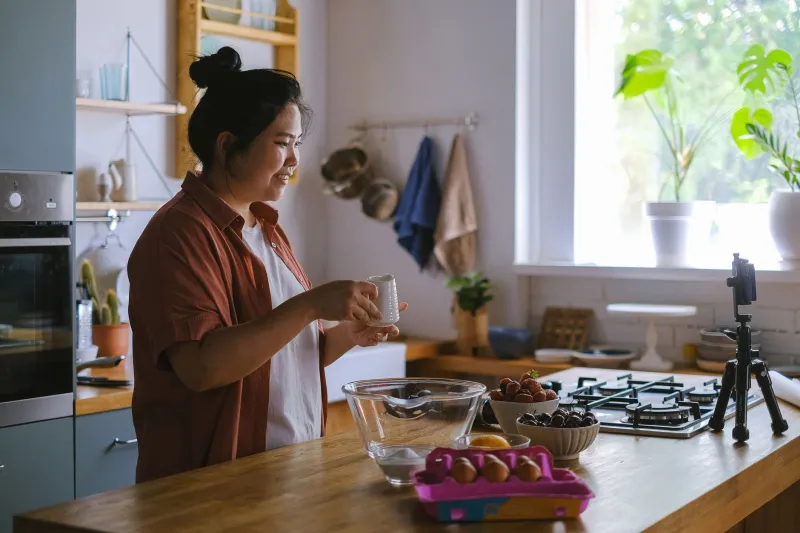
Photo by Photo by McFollis on Unsplash on Unsplash
Somewhere between a software engineering career his parents approved of and a late-night recording session in his Queens apartment, Arjun Mehta figured out something a lot of Desi creators are figuring out right now: the gatekeepers don't actually hold the gate anymore.
His podcast, a candid, often hilarious deep-dive into second-generation South Asian identity in America, crossed 100,000 monthly listeners without a single pitch to a major network. No agents. No development deals. Just a decent mic, a Patreon page, and an audience that was hungry for exactly what he was making.
"I used to think I needed someone to validate the idea first," he says. "Now I realize the audience is the validation."
Arjun isn't an outlier. Across the US, a quiet but genuinely significant creative economy is taking shape — one built by South Asian podcasters, YouTube producers, digital studio founders, and content entrepreneurs who have collectively decided that waiting for mainstream media to make space for them is a losing strategy.
The Infrastructure They Built for Themselves
What makes this moment different from earlier waves of Desi content creation isn't just the tools — it's the infrastructure. Creators aren't just posting videos and hoping for the best. They're building actual businesses.
Take the rise of South Asian-focused production collectives in cities like Chicago, Houston, and the Bay Area. These aren't vanity projects. They're lean operations with monetization strategies that would make a traditional studio exec raise an eyebrow: Substack newsletters with paid tiers, YouTube channels running mid-five-figure monthly AdSense, merchandise lines tied to cultural identity, and live events that sell out community halls in under 48 hours.
Divya Nair, who runs a digital studio in Atlanta focused on South Asian women's stories, describes the model plainly. "We don't need a network to greenlight us. We go straight to our community, we pre-sell, we crowdfund where we need to, and we produce. The margins are actually better because we're not splitting revenue with people who didn't believe in us anyway."
Her studio's last short film series was funded entirely through a combination of Kickstarter, brand partnerships with South Asian-owned businesses, and a direct licensing deal with a streaming platform she approached herself — after the project already had an audience.
Monetization Without Compromise
One of the most interesting dynamics in this space is how creators are threading the needle between commercial viability and cultural authenticity — something traditional media has historically struggled to do with South Asian stories.
The standard Hollywood approach has often meant watering down Desi narratives to make them more "universally" palatable, which is a polite way of saying more palatable to non-Desi audiences. Independent creators don't have that pressure, and it turns out, that's actually good for business.
Podcasts that lean hard into specific South Asian experiences — the aunty gossip circuit, the pressure of being the first-generation kid in a room full of legacy admits, the very particular grief of watching a parent struggle with English in a government office — consistently outperform more generalized content in audience retention and community engagement metrics.
"Niche is not a weakness," says media entrepreneur Karthik Sundaram, whose YouTube channel covering South Asian music history has built a subscriber base of over 400,000 without ever chasing a mainstream trend. "Niche, for us, means depth. And depth builds loyalty that algorithms actually reward."
His channel generates revenue through a combination of YouTube ad share, a membership community on Discord, and consulting work that came directly from brands who found him through his content. None of it required a single Hollywood handshake.
Paying It Forward: Building Pathways for Other Creators
Perhaps the most quietly powerful part of this independent media economy is what happens when creators who've figured it out start pulling others up behind them.
Across the country, informal networks of South Asian creators are sharing pitch decks, negotiating strategies, brand contact lists, and production resources in group chats and community forums that most of the mainstream media industry doesn't even know exist. It's mentorship infrastructure built entirely outside traditional industry pipelines.
Nadia Chowdhury, a Bangladeshi-American documentary filmmaker based in Boston, credits one such network with saving her first major project. "I was two weeks from scrapping the whole thing when someone in our creator group connected me with a South Asian-owned foundation that funds independent documentary work. I didn't know it existed. My film exists because of that community."
Some creators are formalizing this further. A handful of South Asian-led production companies have introduced mentorship fellowships and paid apprenticeships specifically for emerging diaspora talent — creating the kind of entry points that simply don't exist in traditional media for people who don't have industry connections or legacy networks.
The Algorithm Is Neutral (And That's the Point)
There's a practical reason this moment is happening now, and it's worth being honest about it: the economics of digital media have genuinely shifted in favor of independent creators in a way they simply hadn't before.
YouTube's monetization thresholds are reachable. Spotify and Apple Podcasts don't require label deals. Substack lets a writer go directly from essay to paid subscription without a publisher in the middle. TikTok's discovery algorithm doesn't care whether your content has studio backing.
For South Asian creators, who have historically found the traditional gatekeeping structures of American media particularly difficult to penetrate, this flattening of the playing field isn't just convenient — it's transformative.
"The algorithm doesn't know I'm Brown," one creator told us, half-joking. "It just knows whether people are watching. And they're watching."
What Comes Next
The obvious question is whether this independent media economy eventually gets absorbed by the mainstream — whether the success of these creators becomes a talent pipeline for traditional studios rather than a genuine alternative to them.
Some creators are fine with that, if the terms are right. Others are explicitly building to stay independent, treating outside acquisition offers as validation but not destination.
What's clear is that the Desi creative economy that's been quietly assembling itself outside the spotlight isn't going anywhere. It's growing, it's professionalizing, and it's producing work that resonates with audiences in ways that green-lit-by-committee content often doesn't.
No permission needed. They built the door themselves.