Couch, Chai, and Cultural Fluency: Why South Asian Therapists Are the Most Sought-After Healers in America Right Now
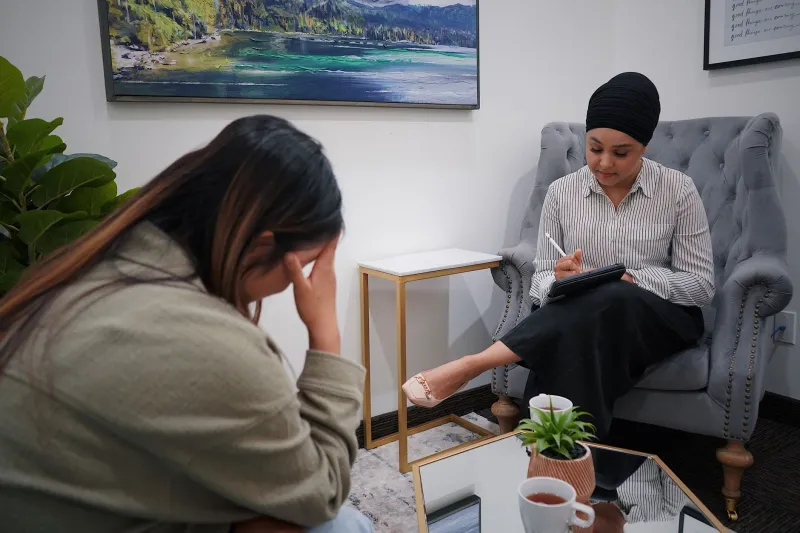
There's a moment that Dr. Priya Nair — a New Jersey-based clinical psychologist — describes as her personal turning point. A South Asian client sat across from her, burst into tears, and said, "I've never had to explain why my mother's opinion of my marriage matters more than my own." No backstory. No cultural footnotes. Just relief.
That moment, she says, is why her waitlist hasn't been under three months in two years.
Across the US, South Asian therapists, psychiatrists, and wellness coaches are experiencing a level of demand that would have seemed almost unimaginable a decade ago. They're not just building practices — they're building empires. And the secret sauce? It's not just a medical degree. It's the ability to hold space for the specific, layered, often contradictory emotional reality of being South Asian in America.
The Cultural Competence Premium
Let's be real: the American mental health system has a diversity problem. For years, South Asian clients reported feeling like they had to spend half their therapy sessions educating their (often white) therapists about izzat, joint family dynamics, immigration grief, or why quitting a stable job to "find yourself" isn't really an option when your parents sacrificed everything to get you here.
That exhaustion created a vacuum. And South Asian mental health professionals stepped right into it.
"Culturally competent care isn't a buzzword anymore — it's a billing point," says Meera Iyer, a licensed therapist in the Bay Area who runs a boutique practice specifically serving South Asian professionals. "Clients are actively searching for therapists who look like them, who understand their family structures, who won't pathologize their cultural values."
Psychology Today profiles, Therapy for South Asians directories, and word-of-mouth in Desi WhatsApp groups have become the new referral pipeline. And it's working — many South Asian-led practices report waitlists stretching months, with clients sometimes flying in from other states for intensive sessions.
From Stigma to Strategy
Here's the twist nobody saw coming: the same communities that once hushed mental health struggles under the carpet are now actively funding the professionals who treat them.
The generation that grew up hearing "log kya kahenge" — what will people say — is now the generation booking weekly therapy appointments and posting about it on Instagram. And the practitioners who grew up in those same households? They're uniquely positioned to meet that shift.
Dr. Sameer Chaudhari, a Chicago-based psychiatrist and first-generation Indian American, puts it plainly: "My parents didn't talk about anxiety. They called it weakness. I grew up navigating that silence. Now I help other people navigate it too. That's not just clinical skill — that's lived intelligence."
That lived intelligence is increasingly monetizable. South Asian wellness coaches — a category that sits adjacent to formal therapy — are building massive platforms on Instagram and TikTok, offering everything from trauma-informed Ayurvedic coaching to boundary-setting workshops specifically designed for Desi daughters navigating difficult family dynamics. Some are charging $300-plus an hour. Others have turned their expertise into online courses, memberships, and books.
The Business of Belonging
If you think this is just about individual practitioners getting clients, think bigger. A quiet industry is forming around South Asian mental wellness in America, and it's increasingly sophisticated.
Group practices led by South Asian clinicians are expanding into multi-therapist collectives. Telehealth platforms are actively recruiting Desi providers to meet surging demand. Wellness retreats blending South Asian spiritual traditions with evidence-based therapy are selling out. And corporate America — finally waking up to the specific mental health needs of its large South Asian employee base — is starting to bring in culturally specific wellness consultants for workplace programs.
"There's a corporate pipeline opening up that didn't exist five years ago," says Anjali Mehta, a wellness consultant who works with tech companies in Silicon Valley. "HR departments are realizing that a generic EAP program doesn't cut it for South Asian employees dealing with model minority pressure, immigration stress, or intergenerational family obligations."
For South Asian professionals building in this space, the opportunity isn't just clinical — it's entrepreneurial.
The Weight of Being the "Go-To" Person
But let's not make this sound entirely frictionless, because it isn't.
South Asian therapists frequently talk about the emotional labor of being the community's designated healer — fielding DMs from strangers, being treated as a free resource, or carrying the weight of representation in a field where South Asian faces are still relatively rare at the institutional level. There's also the reality of navigating their own cultural baggage while holding space for others.
"I'm not immune to the same pressures my clients face," admits one therapist who asked to remain anonymous. "I have my own family expectations, my own immigration story, my own complicated feelings about success. The difference is I've done the work — and I charge for helping others do theirs."
Burnout is a real conversation in this community. So is the tension between staying culturally embedded and maintaining clinical boundaries. The most successful practitioners are those who've figured out how to honor both — and who've built businesses with enough structure to protect their own wellbeing.
Who Gets to Profit From This Shift?
There's also a more uncomfortable question lurking beneath the surface: as South Asian mental wellness becomes a market, who benefits most?
Large telehealth platforms and wellness companies are increasingly co-opting "culturally competent" as a marketing term while funneling profits away from the practitioners themselves. South Asian therapists working in community mental health settings — serving lower-income Desi populations who can't afford private-pay rates — often do the heaviest lifting with the least financial reward.
The practitioners thriving most visibly are, by and large, those with the privilege to build private practices or personal brands — which requires capital, networks, and time that not everyone has equally.
It's a tension worth sitting with, even as we celebrate the broader movement.
The Bigger Picture
What's undeniable is that South Asian mental health professionals are reshaping the American wellness landscape in ways that go beyond their own communities. Their insistence on culturally informed care is pushing the broader field to reckon with its own blind spots. Their entrepreneurial energy is proving that clinical expertise and business acumen can coexist. And their visibility is quietly giving permission to an entire generation of South Asian Americans to finally take their mental health seriously.
The couch looks different when someone on the other side of it actually gets it. And right now, America is learning that firsthand.