Say It With Your Whole Chest: The Fight to Keep Desi Accents on the American Stage

Photo by Photo by Sunil Chandra Sharma on Unsplash on Unsplash
The note came from a casting director, delivered with a smile. "You're great," she told the actor. "Just work on neutralizing the accent a little and we'll talk."
The actor, a South Asian-American woman who'd trained at a conservatory and spent years building her stage résumé, went home and thought about it for a long time. Then she made a decision that, a decade ago, would have felt like professional suicide: she didn't neutralize anything. She kept her voice exactly as it was.
"My accent is not a defect," she says now. "It's data. It tells you where I'm from, who raised me, what shaped me. Why would I erase that to make someone more comfortable?"
This conversation — about accents, authenticity, and who gets to sound like themselves in American entertainment — is happening everywhere right now in South Asian creative communities. And it's not a simple one.
The Long History of the "Fix It" Note
Accent neutralization pressure isn't new for South Asian performers in the US. For most of the history of American film and television, the expectation was binary: either adopt a generic American accent or accept roles that were explicitly coded as foreign, often played for laughs or exoticism. The middle ground — playing a fully realized character who simply happened to speak with a South Asian inflection — barely existed.
This created a specific kind of double bind. Performers who code-switched vocally to access more mainstream roles often found themselves alienated from South Asian audiences who couldn't hear themselves in those performances. Those who held onto their accents were frequently limited to a narrow band of stereotyped characters that did more harm than representation.
"You were either the accent or you were invisible," says one director who has worked extensively in both South Asian independent film and mainstream American television. "There wasn't really a third option until recently."
That third option — being fully yourself, accent and all, in stories that don't center your foreignness — is what a growing cohort of South Asian performers are now actively fighting for.
What Linguistics Actually Says
It's worth pausing on what an accent actually is, linguistically speaking, because the cultural conversation sometimes skips past this.
Every speaker has an accent. American English itself is not accent-neutral — it's simply the accent that American media has historically treated as the default, the unmarked category against which everything else gets measured. When a casting director asks for "accent neutralization," they're not asking for the absence of accent. They're asking for the adoption of a specific, dominant accent.
Dr. Priya Srinivasan, a sociolinguist who has studied language and identity in South Asian diaspora communities, puts it plainly: "What we call 'neutral' accent in American entertainment is a construction. It reflects power, not phonetics. When we ask South Asian performers to neutralize, we're asking them to perform whiteness through sound."
This framing matters because it recenters the conversation. Keeping a South Asian accent isn't a failure to adapt. Erasing it is a concession to a standard that was never actually neutral to begin with.
The Performers Who Are Holding the Line
Across theater, film, and digital media, a cohort of South Asian performers is making deliberate choices to hold onto their vocal identities — and audiences are responding.
In regional theater, South Asian-American actors are increasingly declining to modify accents for roles that don't require it, and some are openly discussing this in industry spaces where such conversations were once considered unprofessional. On YouTube and TikTok, South Asian creators who speak with inherited accents — whether first-generation American or immigrant — are building enormous followings precisely because their voices feel real in a media landscape that has historically sounded very same-y.
The response from audiences, particularly younger Desi viewers, is striking. Comments sections fill up with people describing the specific relief of hearing a voice that sounds like their parent, their grandparent, themselves before they learned to smooth things over in professional settings.
"I didn't realize how much I'd internalized the idea that my family's accent was embarrassing until I watched a show where a character sounded like my mom and it was just... normal," one viewer wrote under a popular South Asian web series. "I actually cried a little."
Directors and the Choices They're Making
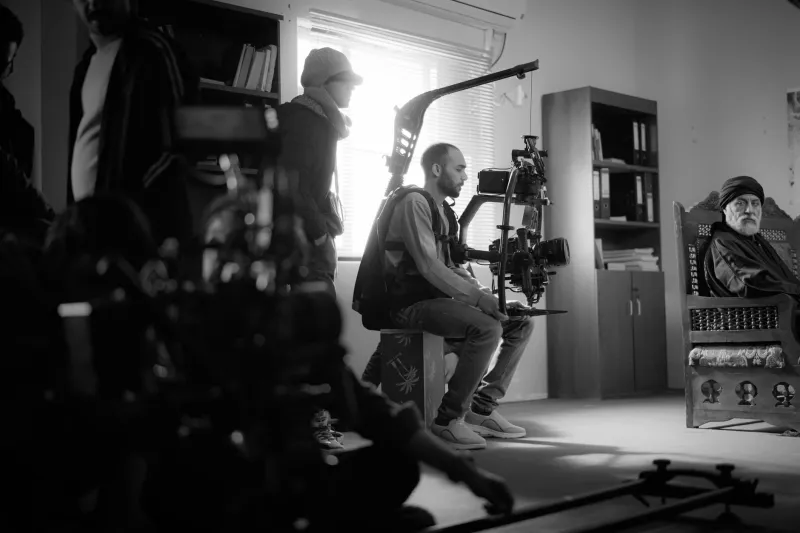
The shift isn't only happening at the performer level. Directors and casting professionals within South Asian-led productions are making explicit choices to protect vocal authenticity on set.
Some directors describe having direct conversations with cast members early in production: your accent is not something we're here to fix. Others are building it into casting calls themselves, specifically seeking performers who have not neutralized their voices, as an intentional creative and cultural statement.
"When I hear a South Asian actor who's clearly been trained to sound American in a way that doesn't quite sit right, it pulls me out of the story," says one independent filmmaker. "There's a kind of performance happening underneath the performance, and it's distracting. Authenticity is actually better craft."
The Tension That Remains
It would be dishonest to pretend this is a resolved conversation. The economic reality for South Asian performers in mainstream American entertainment is still complicated. Accent bias in casting is documented and persistent. The roles that don't require vocal code-switching are still, in many parts of the industry, harder to access.
Some performers describe making pragmatic, context-specific decisions — modifying their voice for certain auditions while holding onto it in creative spaces where they have more control. It's not a betrayal of authenticity so much as a survival strategy in a system that hasn't fully caught up to where the culture is going.
But the direction of travel feels clear. Audiences are increasingly attuned to the difference between a South Asian character voiced authentically and one that sounds like a performance of what someone thought a South Asian character should sound like. The former lands. The latter grates.
The Bigger Picture
At its core, the accent conversation is about belonging — about whether South Asian Americans get to exist fully in American cultural spaces or whether full participation requires a kind of ongoing self-erasure.
The performers and creators pushing back on accent neutralization are making an argument that goes beyond personal preference. They're saying that authentic representation isn't just culturally meaningful. It's narratively richer, more emotionally resonant, and ultimately more honest.
Say it with your whole chest, accent and all. The audience is listening.